There is a particular kind of trip that the northeastern Himalayas seem designed for—one that moves slowly between two states, gathering impressions rather than ticking sites. Sikkim on one side: monasteries, mountain light, the road to Kanchenjunga. Darjeeling on the other: toy trains, tea estates, the particular gentleness of a colonial hill town that has made peace with its past.
What makes this journey genuinely possible—rather than exhausting—is where you anchor yourself between the two. Too close to Gangtok and the Darjeeling leg feels remote. Based in Darjeeling and the depth of South and West Sikkim is cut off. Baiguney, positioned in the Soreng district where the two regions fold into each other, gives you both.
Darjeeling from Simala is approximately an hour by road—a journey that takes you across the Rangit bridge and up through the foothills as the valley falls away behind. The approach through this route is unhurried and verdant, arriving at the town from the quieter southern side rather than through the main tourist corridor.
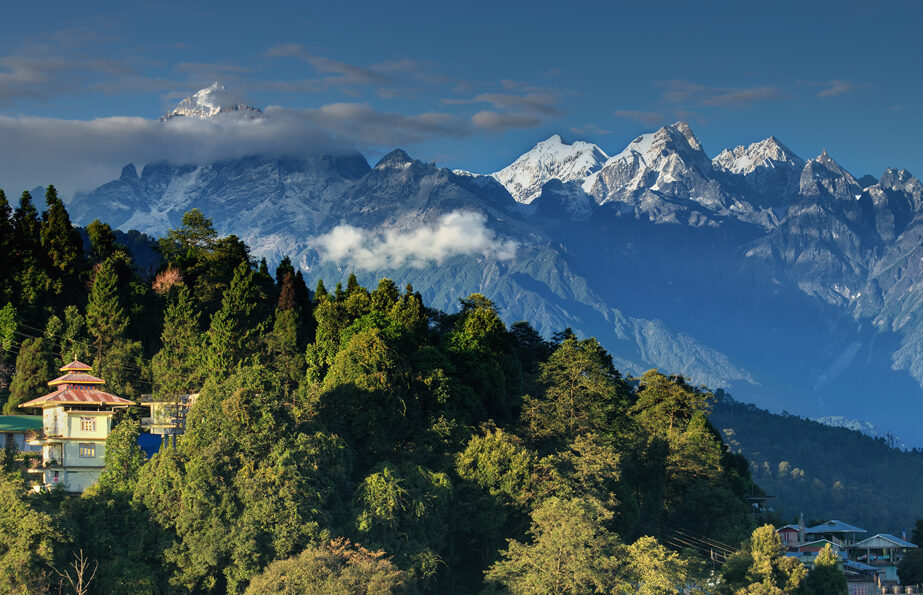
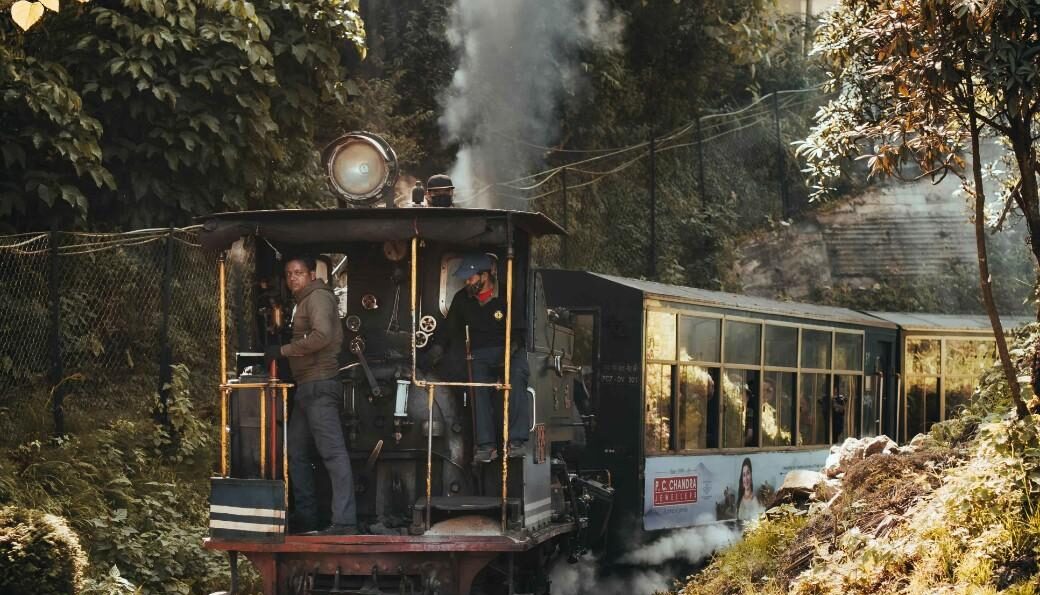
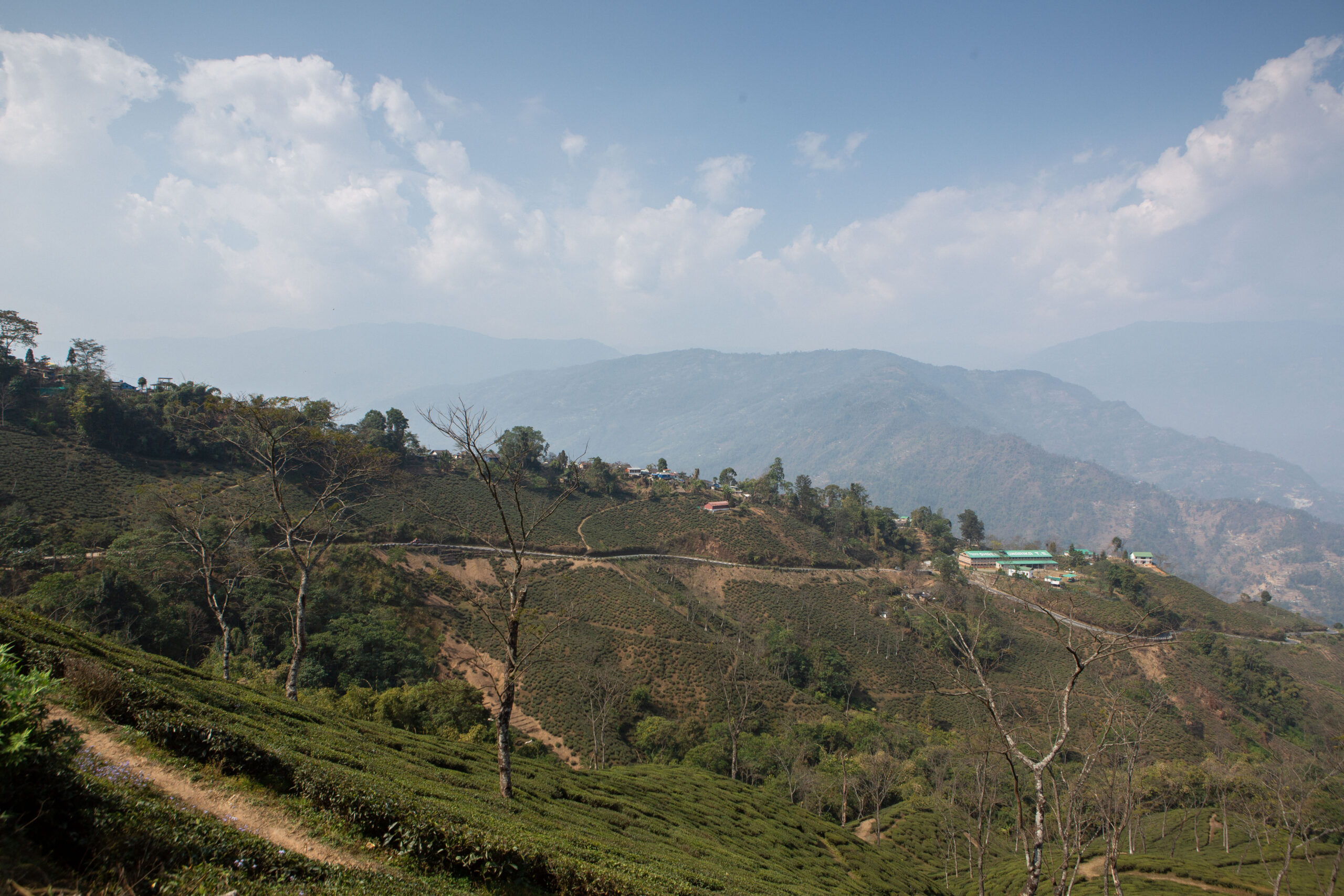
In June, Darjeeling is particularly atmospheric. The first monsoon rains have arrived, but the early weeks still offer regular clear mornings with visibility to Kanchenjunga. The tea gardens are at their most vivid—the second flush, considered by many to be the finest of the year, is being harvested through June. The Toy Train, a UNESCO World Heritage journey, runs through landscapes that look, in monsoon light, like a painting that got ambitious.
Deeper into Sikkim, the road from Simala opens multiple routes depending on what the day calls for. North toward Ravangla and the Buddha Park—a spiritual site of quiet power, set on a ridge with views that stretch on clear days to the glaciers of North Sikkim. East toward Namchi and the Char Dham complex, one of the most ambitious religious sites in the region. West toward Pelling and the ruins of Rabdentse, the old capital of Sikkim, hidden in the forest above the valley.
Each of these places is a half-day or full-day journey from Simala. You drive out in the morning, spend the middle hours somewhere that changes your sense of things, and return in the afternoon—in time for the pool, for the river, for a long dinner at Bariko without the rush that comes from having too far still to go.
The best travel days are not the ones where you covered the most ground. They are the ones where you got somewhere that surprised you and then returned somewhere that held you. That rhythm—outward in the morning, inward at dusk—is one of the oldest and most restorative patterns in travel.
Simala is built for the return part of that rhythm. Not as a stopover, but as a destination in its own right. The river, the hills, the quiet—these don’t ask anything of you. They simply make the rest of the journey feel worth it.