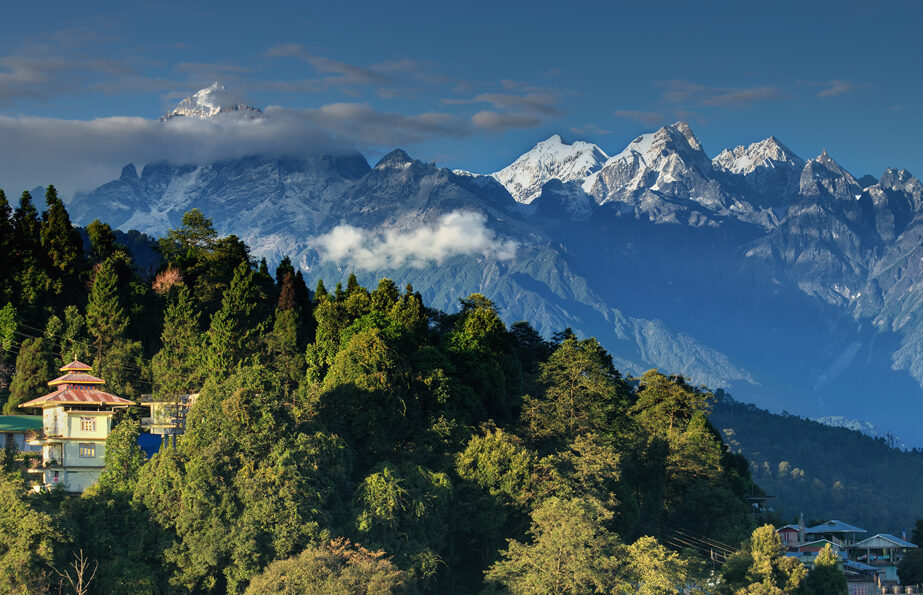
There is a version of Sikkim that appears in every travel guide. Clear skies over Kanchenjunga. The golden light of October falling across the Temi Tea Garden. The dry mountain roads of spring, perfectly passable and photogenic.
And then there is July — the version that the most devoted visitors consider the better one.
The monsoon arrives off the Bay of Bengal, climbs the foothills, and settles over the valleys in a way that fundamentally changes the character of the landscape. Most itineraries are planned around other months. The travellers who choose this one tend to return to it.
The transformation the monsoon makes to this part of the Himalayas is total and immediate.
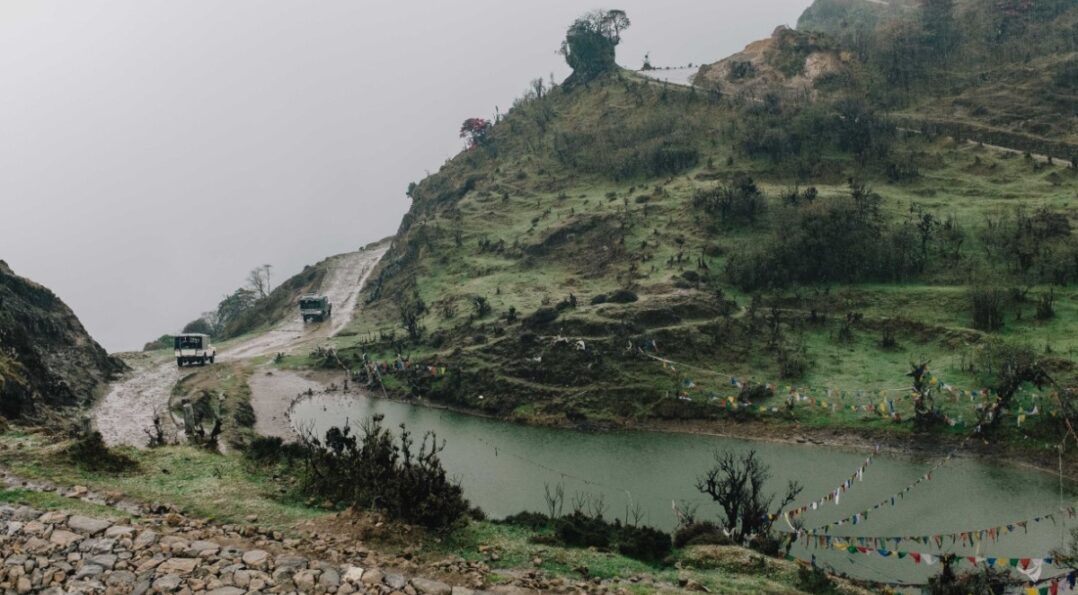
The hills that are dusty green in April are, by July, a saturated emerald that the camera struggles to reproduce accurately. Waterfalls that are dry gullies in peak season run full and loud from every slope. The Rangit River doubles in volume and presence — wide, powerful, the colour of deep jade. The air carries the clean mineral scent of rain on warm earth and wet forest, which is the smell of renewal in the most literal sense.
Temperatures in Baiguney through July sit between 15°C and 25°C. The rain tends to arrive in the afternoon and clear by evening. Mornings are often open and bright. The day structures itself around the weather in a way that, once you adjust to it, feels entirely natural.
July is the one time of year when South and West Sikkim move at their own pace.
The viewpoints are open and quiet. The monastery courtyards have room to breathe. The roads between Baiguney and Namchi, Ravangla, and Darjeeling carry a fraction of their peak-season traffic. The Temi Tea Garden, which draws crowds in October, is green and atmospheric and largely to itself in the rain.
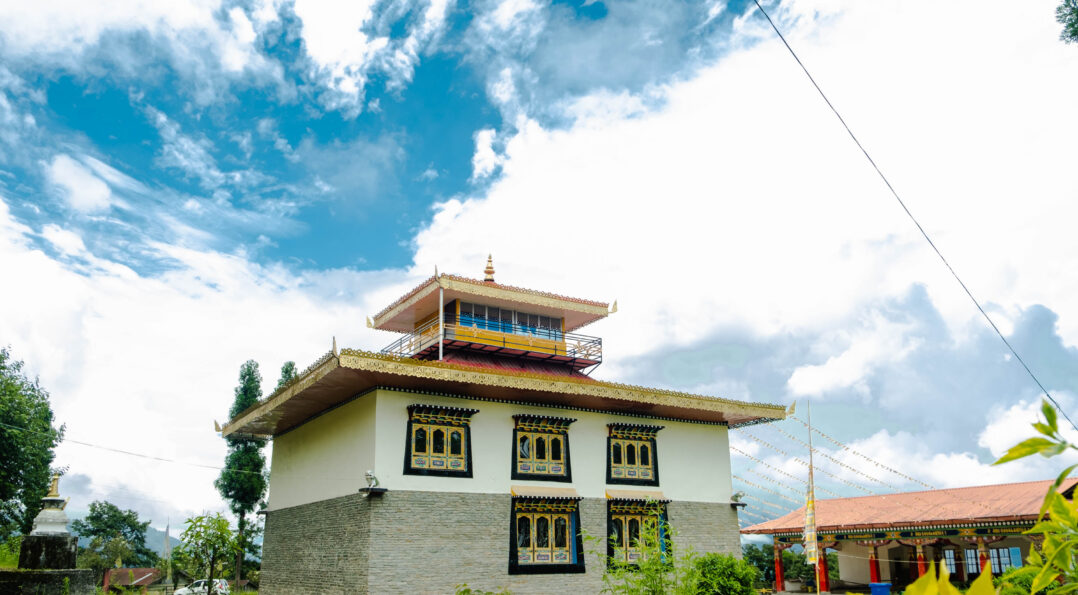
The experience of visiting a place like Ralong Monastery when you are the only visitors — when the monks continue their morning and the mist moves through the courtyard without anyone watching — is entirely different from visiting the same place in a crowd. One is an excursion. The other is a memory.
How to Plan Around the Season
South and West Sikkim, at lower elevations, are stable and accessible through July and suit the monsoon experience well. Higher elevations of North Sikkim are better saved for another trip — the approach roads at altitude carry more uncertainty in the rainy months and the journey is less predictable than it is worth.
Build some flexibility into the days. The afternoon that the rain keeps you indoors — watching the valley disappear into low cloud, with something warm and the sound of the river below — is not time lost. For travellers who come to Sikkim in July, it is often the afternoon they mention first when they talk about the trip.
The case for July in Sikkim is ultimately a case for a particular kind of travel. Unhurried. Unscripted. Willing to let the weather be part of the experience rather than an obstacle to it.
Sikkim in the monsoon does not perform. It simply exists — loudly, greenishly, and magnificently — and offers itself to the traveller who is ready to receive it on its own terms.
The ones who come in July tend to understand something about this part of the world that takes the rest of us a few more trips to arrive at. The rain was always part of the story. It was just waiting for you to show up during it.